Calcific treatment with ESWT
The Physical Therapy Clinic · Shockwave therapy by condition
Written by Andy Roberts, BSc Hons, MSCP · Physiotherapist, Co-owner
What is calcific tendinitis of the shoulder?
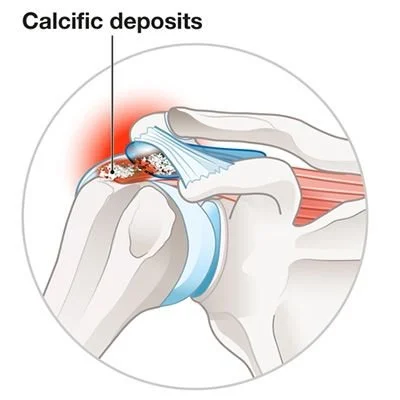
Calcific tendinitis is a condition where calcium deposits form within the rotator cuff tendons, most commonly the supraspinatus. These deposits can cause shoulder pain, inflammation and reduced movement – particularly when the body begins to break them down.
What is shockwave therapy (ESWT)?
Extracorporeal Shockwave Therapy is a non-invasive treatment that uses acoustic waves to:
- Break down calcium deposits
- Stimulate blood flow and healing
- Reduce pain and improve shoulder function
Does ESWT work for calcific shoulder pain?
Yes – multiple clinical trials and systematic reviews show that ESWT is effective for treating calcific rotator cuff tendinitis.
Proven benefits:
- Significant pain reduction
- Improved shoulder mobility and function
- Reduction or resorption of calcium deposits over time
Important:
- High-energy ESWT is significantly more effective than low-energy treatment
- Results typically improve over weeks to months, not instantly
How many shockwave sessions are needed?
Most treatment plans include:
- 3 to 6 sessions
- Each lasting 10–20 minutes
- Usually spaced weekly
Some chronic or larger deposits may require additional sessions.
What does ESWT feel like?
- Mild to moderate discomfort during treatment
- Intensity depends on the energy level used
- No injections or anaesthesia required
- No downtime after treatment
How does ESWT compare to other treatments?
ESWT vs steroid injection
- ESWT targets the cause (the calcium deposit)
- Steroid injections mainly reduce inflammation temporarily
- ESWT may provide longer-term results
ESWT vs ultrasound-guided lavage (barbotage)
- ESWT is non-invasive, needs no needles and carries lower risk
- Lavage is more invasive, is often better for complete removal of calcium and may give faster resolution in some cases
Who is ESWT best for?
ESWT is most effective if you:
- Have confirmed calcific deposits on imaging
- Have persistent shoulder pain despite physiotherapy
- Want to avoid injections or surgery
- Have a chronic (long-standing) condition
How long does it take to work?
- Some patients notice improvement after 1–2 sessions
- Most see results over 4–12 weeks
- Calcium deposits may continue to reduce for several months
Advantages of ESWT
- Non-invasive (no needles or surgery)
- Clinically proven for calcific tendinitis
- Targets the underlying cause
- Can help avoid surgery
- Minimal recovery time
Limitations of ESWT
- Not effective in all cases
- Can be uncomfortable during treatment
- May require multiple sessions
- Less effective than lavage for complete deposit removal
FAQs
Is shockwave therapy effective for calcific tendinitis? Yes. High-quality clinical studies show that ESWT reduces pain, improves shoulder function and helps break down calcium deposits in calcific tendinitis.
Can ESWT dissolve calcium deposits? ESWT helps fragment and stimulate the body to resorb calcium deposits, rather than instantly dissolving them. This process occurs gradually over weeks to months.
Is ESWT better than a steroid injection? ESWT often provides longer-term benefits because it targets the calcium deposit itself, whereas steroid injections mainly reduce inflammation temporarily.
Is shockwave therapy painful? It can cause mild to moderate discomfort, especially at higher energy levels, but it is generally well tolerated and does not require downtime.
How successful is ESWT for shoulder calcification? Success rates vary, but research shows significant improvement in most patients, particularly when high-energy protocols are used.