If you are male, in your 40′s or 50’s and want to take a re-set on your physical and mental health. Click on this link and have a look. We think this is a really good way to return to activity in a controlled safe way if you have stepped back for any reason.
https://thephysicaltherapyclinic.co.uk/wp-content/uploads/2025/09/NewLogo1-e1756979990492-300x138.png00Andy Robertshttps://thephysicaltherapyclinic.co.uk/wp-content/uploads/2025/09/NewLogo1-e1756979990492-300x138.pngAndy Roberts2026-07-22 09:57:252026-07-22 09:59:39Thinking about getting fit again?
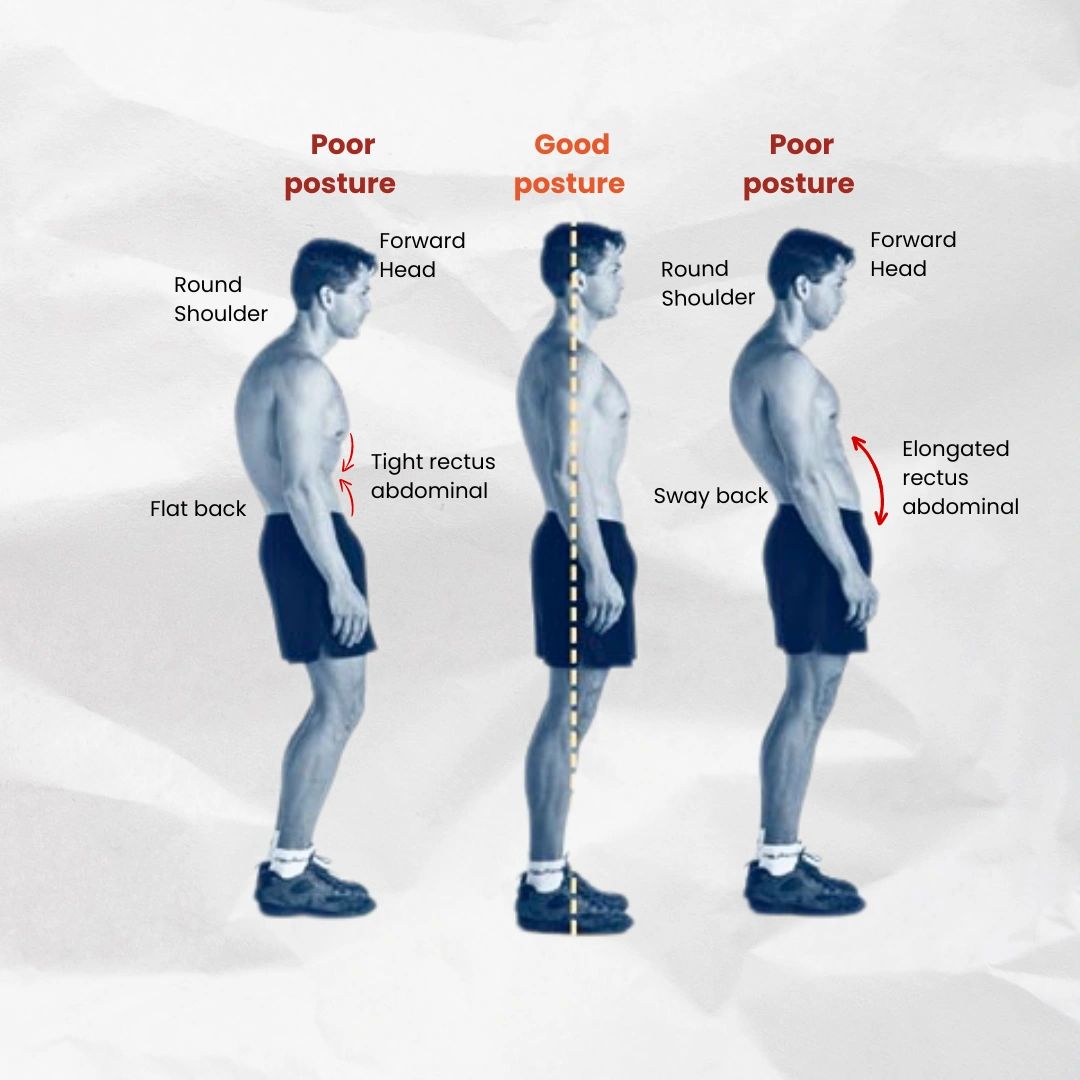
As society changes and more of us are either working or playing on devices we just wanted to show you the potential issue’s and what can be done about them.
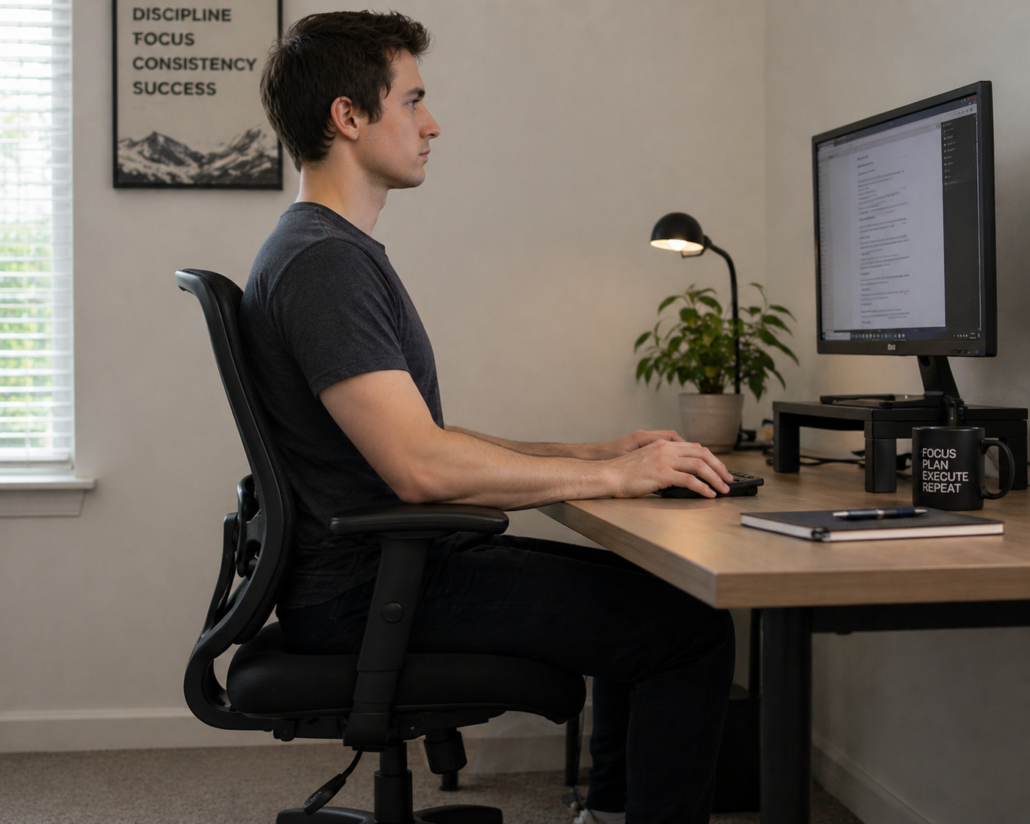
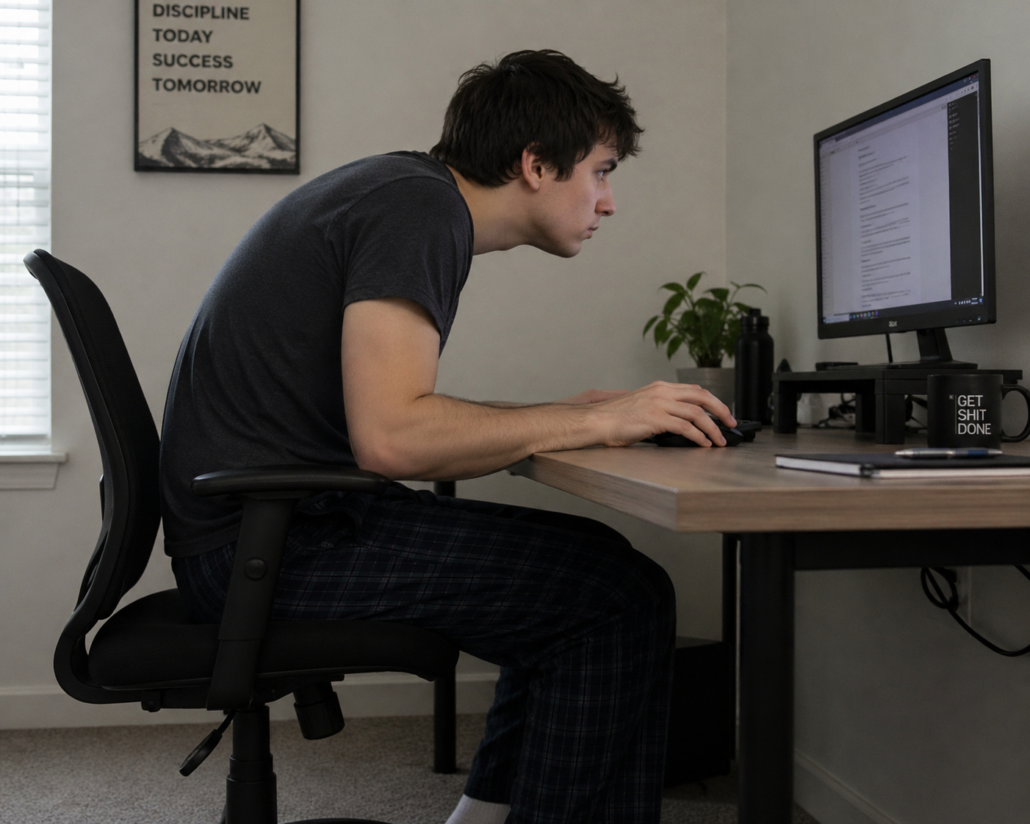
So there are two pictures below, one of a poor posture and one of a good posture.
The one change that will take you from picture B to picture A is the position of your pelvis. Imagine your pelvis is a bowl and is 2/3rds full of water. when you sit imagine the water just leaking out the front of your pelvis (Never the back). In doing so you will transform your posture!
Keeping it is another matter as it is a habit but all habits are hard to break, the good ones as well as the bad ones so perservere and it will become natural for you.
Make sure you are sat on a good supportive chair and take support from the back of the chair.
Clearly this is advice for people who don’t find it painful in the lower back when sitting up tall.
If you are in any doubt, give us a call. 01604 630636
https://thephysicaltherapyclinic.co.uk/wp-content/uploads/2025/09/NewLogo1-e1756979990492-300x138.png00Andy Robertshttps://thephysicaltherapyclinic.co.uk/wp-content/uploads/2025/09/NewLogo1-e1756979990492-300x138.pngAndy Roberts2026-04-28 14:48:182026-04-28 14:48:18Posture in the Workplace
We are trialing a live diary! starting Thursday 26th March. The details will be posted here next week! This will give you the opportunity to book an appointment with Faris online.
If it proves popular we can increase availability and include other physio’s. We are taking it slowly as we dont want to lose control of the diary for those who continue to call in.
You will always be able to continue to book via phone or email as you can at the moment.
Watch this space!!!
https://thephysicaltherapyclinic.co.uk/wp-content/uploads/2025/09/NewLogo1-e1756979990492-300x138.png00Andy Robertshttps://thephysicaltherapyclinic.co.uk/wp-content/uploads/2025/09/NewLogo1-e1756979990492-300x138.pngAndy Roberts2026-03-11 09:59:482026-03-11 09:59:48Live Diary Online 26th March 2026
Just remember Sciatica is NOT a diagnosis, it is a symptom of your sciatic nerve being compressed by something…….
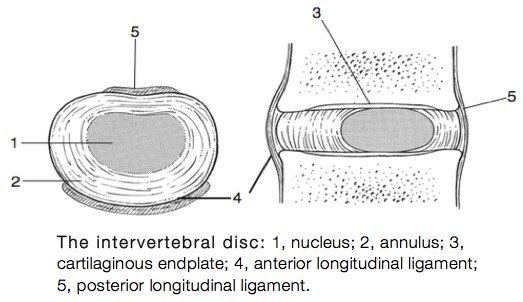
This is a simple drawing in plan and side view of a healthy disc sat between two vertebra and with the longitudinal ligaments in place at the front and the back of the disc.
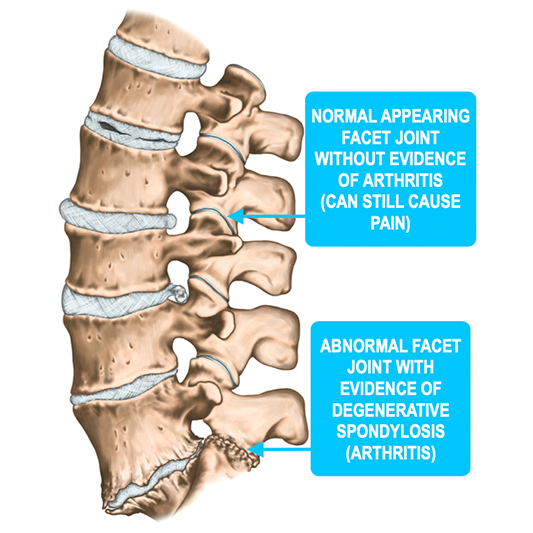
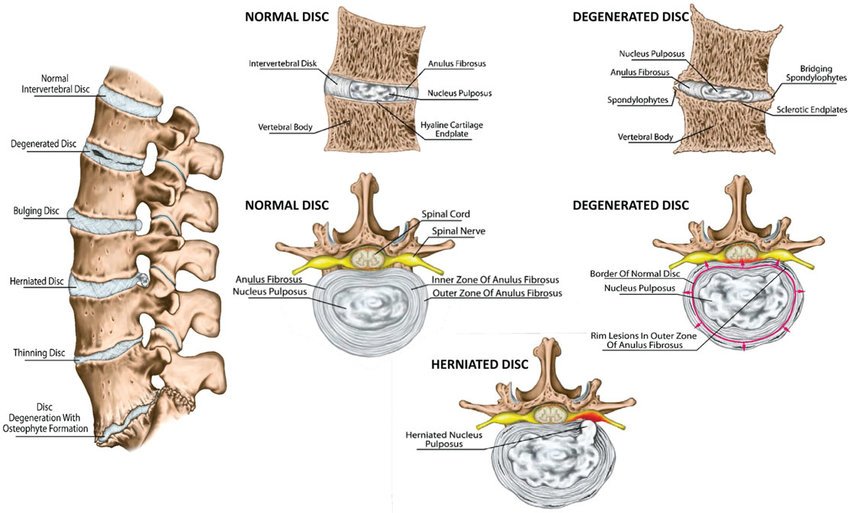
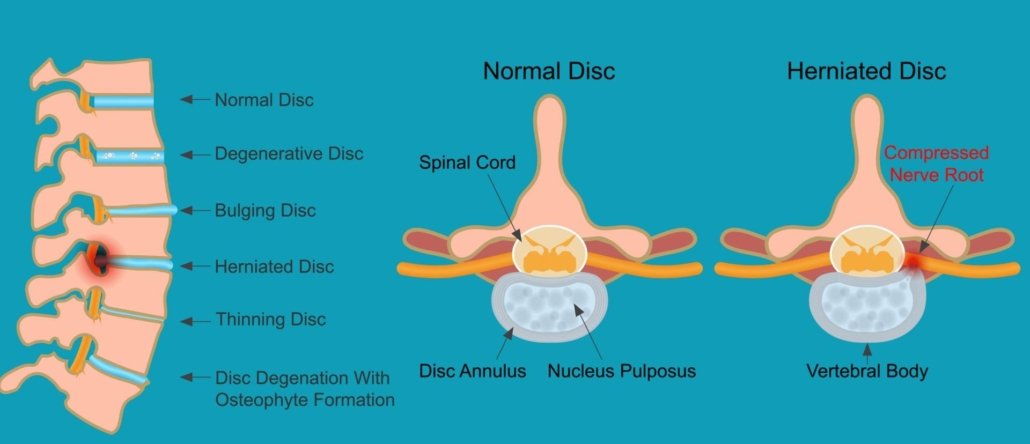
Above is a good diagram that highlight’s the disc in its correct position identifying the difference between a healthy disc and a degenerated disc. The yellow indicates the peripheral nerves coming out from the spinal cord. Note in the healthy disc picture, the peripheral nerves are not touching anything but in the degenerative disc picture, the disc is touching the nerve.
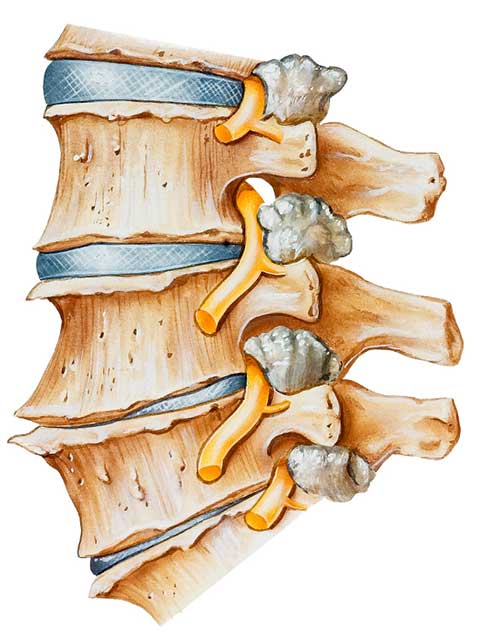
Above is a good example of what happens when a disc degenerates and starts to lose its integrity and structure. At this point often the case is that people experience low back ache and pretty much ignore it.
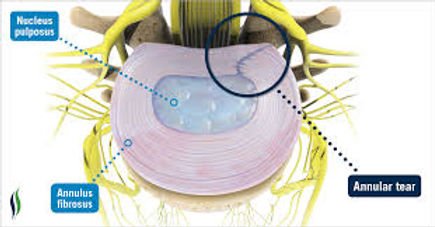
If the degeneration is allowed to continue then ultimatley an Annular tear can form as shown above.
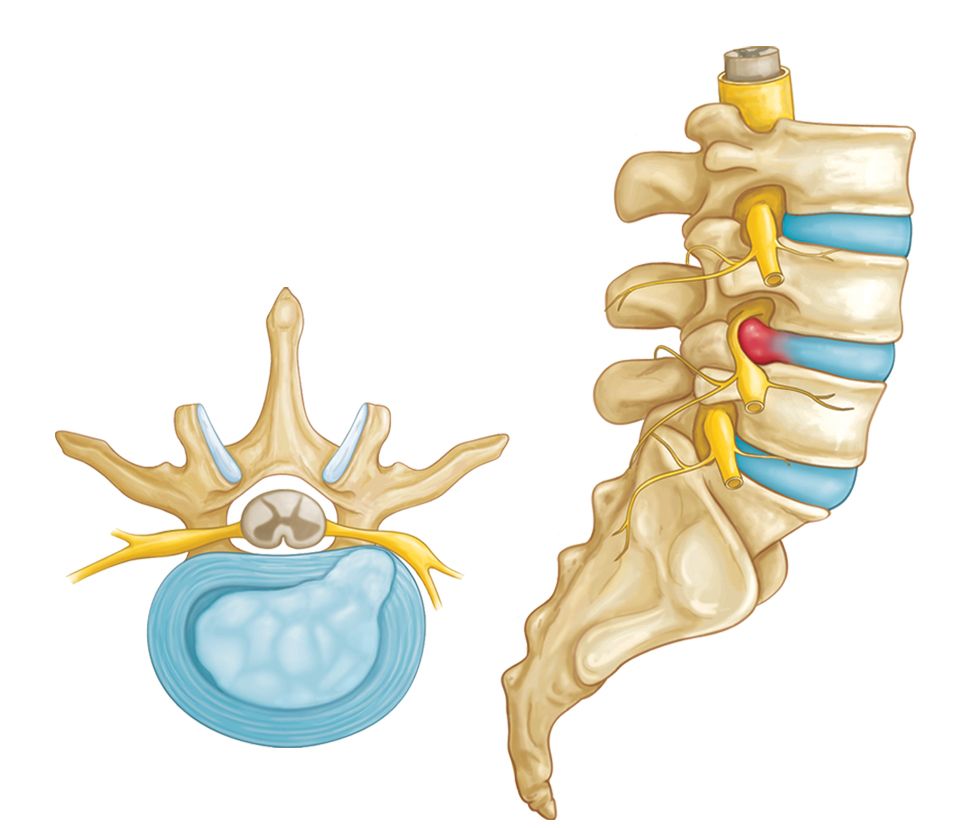
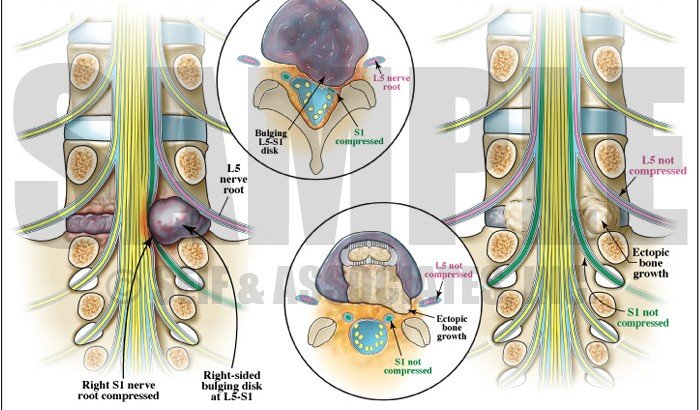
From the annular tear a prolapse or herniation can occur and as you can see above on the left a nerve root can be compromised.
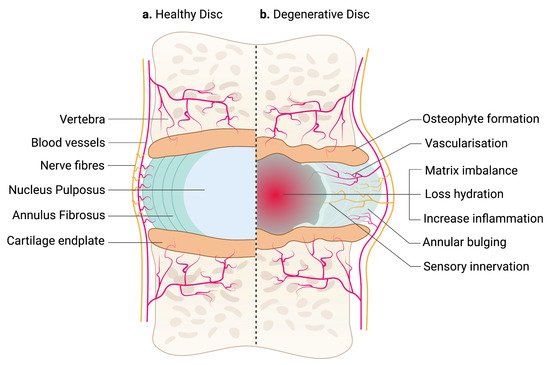
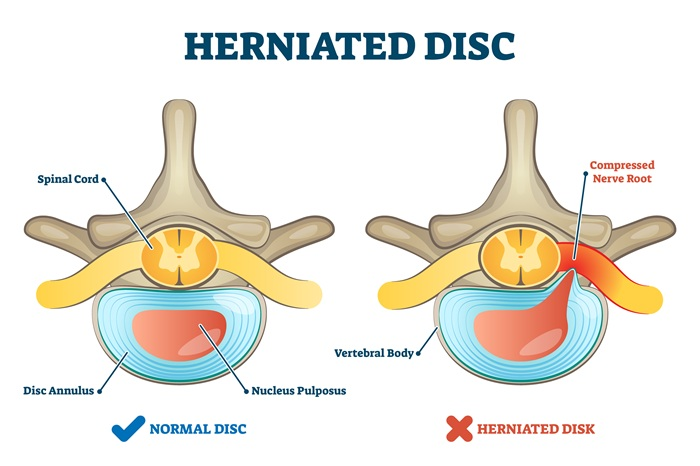
This is a good illustration showing a disc herniation which has compromised the nerve root.
If the nerve root being compromised, is one of the nerve roots that makes up the sciatic nerve then here is your diagnosis. Sciatica has occured as a consequence of the nerve root being compressed.
This is a very simple overview of why you may be having pain or pins and needles in your leg and pain in your back.
If a bulge or herniation occurs in the centre of the disc at the back then this could result in central cord compression which is far more serious. That explanation is for another day.
Thanks for reading
https://thephysicaltherapyclinic.co.uk/wp-content/uploads/2025/09/NewLogo1-e1756979990492-300x138.png00Andy Robertshttps://thephysicaltherapyclinic.co.uk/wp-content/uploads/2025/09/NewLogo1-e1756979990492-300x138.pngAndy Roberts2026-01-27 16:12:512026-01-27 16:12:52Ever wondered what actually happens when you have a disc prolapse in your back and sombody diagnoses you with Sciatica?
Happy New year to one and all! we hope you had a lovely break and a festive season full of joy.
I have just come back from a 10 mile walk and it is icy out there folks. I know that is no surprise! What is however, is how many people who are out without appropriate footware!
Also walking poles are so helpful in this weather just to give you that extra bit of stability and to reduce the chances of slipping as that is when a lot of damage occurs.
Even if you dont fall a signifcant slip is enough to seriously tear a muscle or tendon as your reflex reaction will be maximum power through certain muscles to attempt to maintain eqilibrium so on these rare occasions your body will overstrain a muscle or tendon to attempt to keep you upright.
Consider walking poles or sticks as a temporary option and good walking boots/shoes are a must!
Stay safe out there folks, Prevention is far easier cheaper and less painful than cure.
So Abi, who we discussed a couple of weeks ago also came to me approximately 8 weeks back, with an ongoing pain behind her right knee when running. Abi has a good coach, Joshua Schofield, who has been working with Abi getting her up to speed to do a PB in her next marathon.
Everything was going well except this niggly pain behind Abi’s right knee which would get progressively worse the longer she ran. Joshua sent me some video’s so I could assess Abi’s running style. I have included one of the video’s with Abi’s permission, to highlight the issue I identified.
Joshua had all bases covered with Abi doing some running and a lot of strength training, so she was strong through the core and buttocks. Despite being very strong she appeared to sit back in her stance towards the end of a long run which suggested loss of pelvic control due to core exhaustion.
When I brought Abi in and assessed her however, the issue was her right hamstring insertion, not her knee and the cause of her sitting down in her stance was as the hamstring became sorer, she was unable to extend through her right knee before heel strike so to be able to get her foot to the floor she was dropping her pelvis.
We could not afford for Abi to stop her training so we treated the hamstring, inhibited the hamstring that was injured with K tape and most importantly explained to Abi in clear language what the problem was.
Subsequently Abi was able to continue training, including running, monitor her right knee extension and override her subconscious when needed to maintain correct knee extension before heel strike subsequently stopping the sitting back in her stance towards the end of a long run.
Thankfully this has enabled Abi to get back to her full schedule without losing time and remains on schedule for a PB in her next marathon.
If you are a runner, walker or a hiker and you have a niggle that effects your performance we might be able to help.
Happy New Year to you all, lets make 2026 a year to remember!!
https://thephysicaltherapyclinic.co.uk/wp-content/uploads/2025/09/NewLogo1-e1756979990492-300x138.png00Andy Robertshttps://thephysicaltherapyclinic.co.uk/wp-content/uploads/2025/09/NewLogo1-e1756979990492-300x138.pngAndy Roberts2025-12-30 14:05:292026-01-06 13:16:10Diagnosing and treating leg injuries in Runner’s

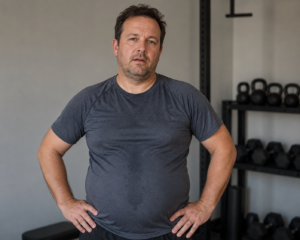 s or 50’s and want to take a re-set on your physical and mental health. Click on this link and have a look. We think this is a really good way to return to activity in a controlled safe way if you have stepped back for any reason.